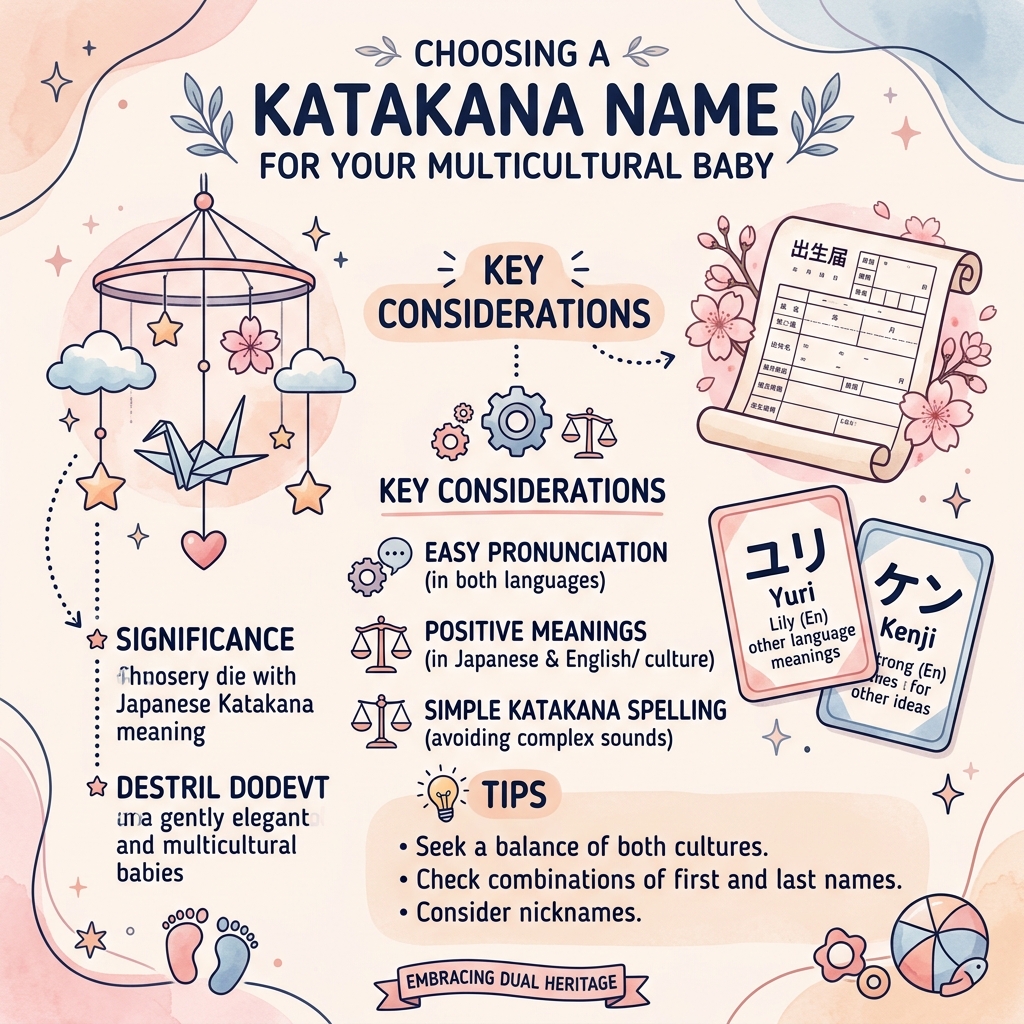
The Rise of Katakana Baby Names in Multicultural Japan
Welcoming a child into a multicultural or international family is an extraordinary journey. If your child will grow up bridging Japan and another country, one of the most consequential decisions you will make as parents is choosing their name. More and more multicultural parents are intentionally selecting a baby name in Katakana (カタカナ) rather than forcing a complex Kanji combination.
Why Many Parents Intentionally Choose Katakana Over Kanji
For generations, multicultural parents in Japan felt societal pressure to choose Kanji characters (漢字) for their child's name, often engaging in complex mental gymnastics (called ateji, 当て字) to find characters that phonetically approximated a Western name (like using 咲良 for "Sara" or 蓮 for "Ren"). While beautiful, this approach carries significant practical drawbacks:
- Kanji Ambiguity (Kirakira Names): Unusual Kanji combinations can be misread by Japanese teachers, doctors, and government officials, burdening the child with a lifetime of explaining how to read their name.
- Unintended Meanings: Each Kanji character carries specific historical and semantic baggage that might not resonate with the family's international heritage.
- Total Phonetic Clarity: A name written in Katakana is 100% unambiguous. Every Japanese person—from nursery school teachers to municipal bank clerks—will pronounce the child's name perfectly on the very first try.
- Embracing Dual Identity: Katakana celebrates the child's international heritage as a point of pride, signalling that they are a citizen of the world.
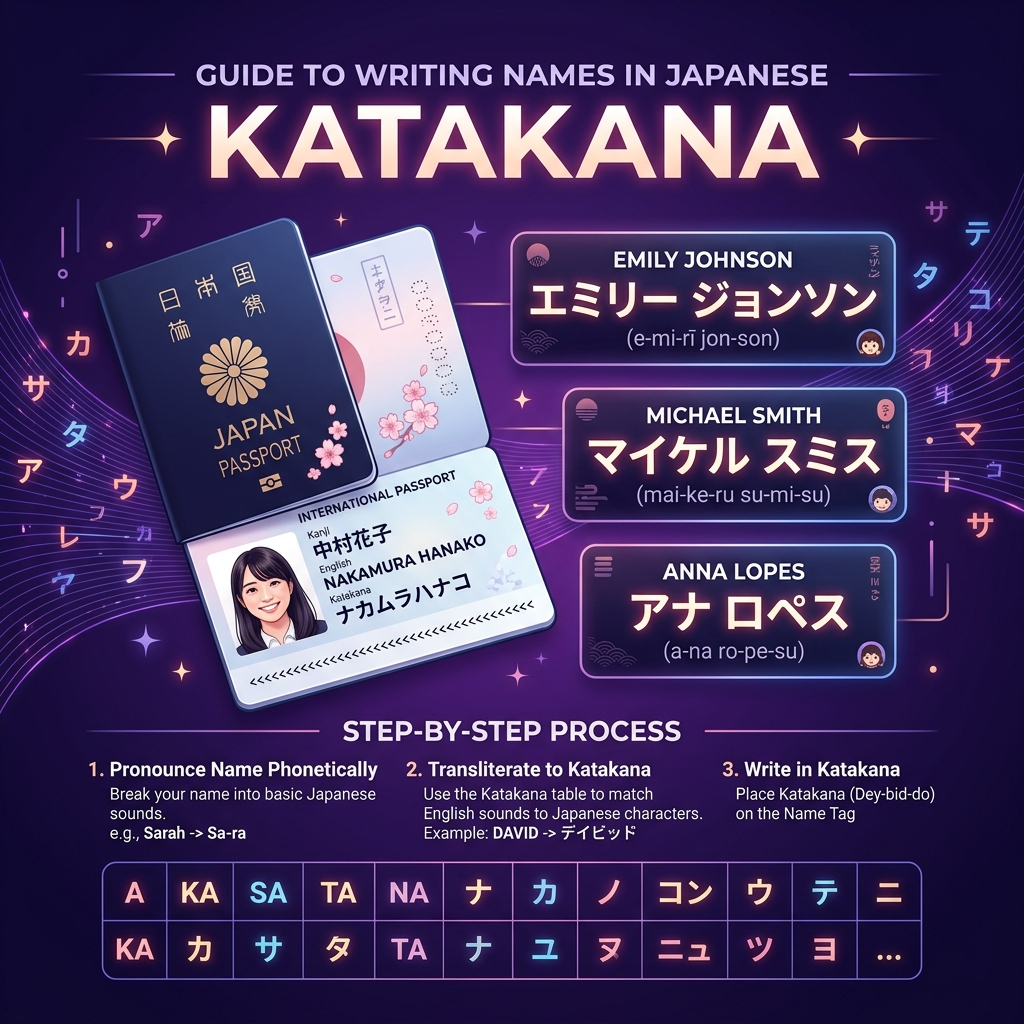
Before finalizing your choice, test how any candidate name translates into Japanese using our free katakana converter, or read our pillar guide on How to Write Your Name in Katakana.
Sound Symbolism (Oto-no-Kanjō): Acoustic Aesthetics
In Japanese linguistic culture, sounds themselves carry visceral sensory, emotional, and psychological associations—a phenomenon linguists call sound symbolism or oto-no-kanjō (音の感情). When choosing a Katakana baby name, consider the subconscious emotional feeling evoked by specific vowel and consonant groups:
1. Open Vowels (A and O): Warmth, Strength & Radiance
Names featuring the open vowels [a] and [o] project brightness, expansive energy, and warmth. Because the mouth opens widely to articulate them, these sounds feel inviting and confident:
- Noah → ノア (no-a): Warm, gentle, expansive.
- Leo → レオ (re-o): Bright, brave, regal.
- Maya → マヤ (ma-ya): Clear, sunlit, friendly.
2. Gentle Liquids and Nasals (M, N, R): Affection & Elegance
Consonants in the M-row, N-row, and R-row are continuous sonorants. They flow effortlessly without harsh plosive friction, conveying gentle tenderness and emotional harmony:
- Mia → ミア (mi-a): Delicate, sweet, musical.
- Luna → ルナ (ru-na): Luminous, poetic, serene.
- Ema / Emma → エマ (e-ma): Universal, approachable, affectionate.
3. Crisp Plosives (K, T): Energy, Dynamism & Precision
Names featuring crisp stops like the K-row and T-row project quick intelligence, athleticism, and focused determination:
- Kai → カイ (ka-i): Sharp, oceanic, spirited.
- Luke → ルーク (rū-ku): Crisp, luminous, steady.
Avoiding Unfortunate Japanese Homophones & Pun Traps
The greatest hidden danger for international parents is choosing a beloved English name that accidentally sounds identical to an awkward, embarrassing, or taboo Japanese word. Because Japanese has a relatively small sound inventory (only ~100 basic morae), homophones (words that sound identical) are everywhere.
1. "Gary" → 下痢 (geri): In Japanese, ゲリ (geri) means acute diarrhea. A child named Gary will face inevitable classroom teasing.
2. "Ben" → 便 (ben): While Benjamin (ベンジャミン) is perfectly fine, shortening it to standalone ベン (Ben) coincides with the formal word for bodily waste/feces (便, ben, as in benjo 便所, toilet).
3. "Skip" → スキップ (sukippu): While cheerful in English, in Japanese it sounds exclusively like the physical action of skipping or skipping school classes.
4. "Cole" → 殺す (korosu) / コル (koru): If spoken quickly without the proper long vowel, it can evoke unfortunate sounds. Always ensure it is written as elongated コール (kōru).
5. "Abby" → 浴び (abi): While not offensive, it sounds like the verb stem for being showered with liquids or blows.
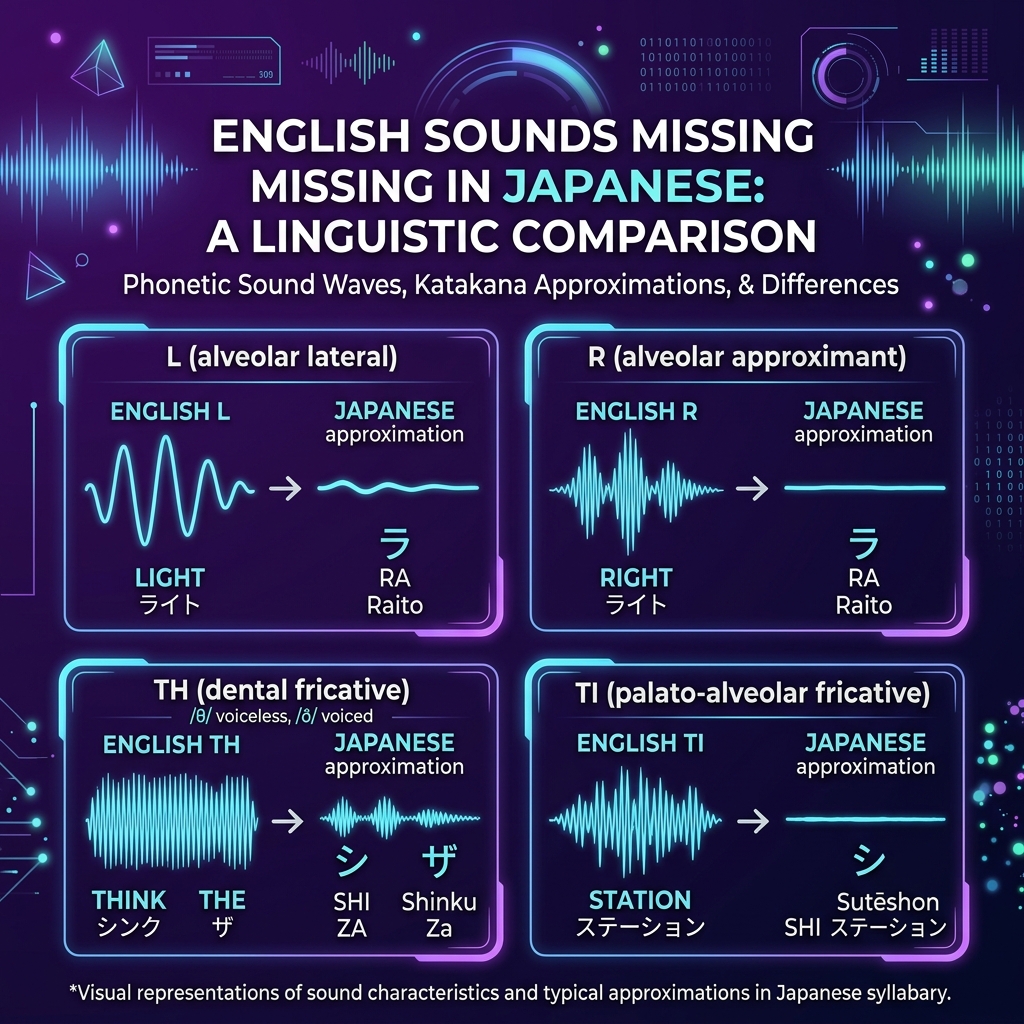
For deeper insight into how English sounds shift when adapted into Japanese, consult our companion linguistic guide on English Sounds That Don't Exist in Japanese.
20 Top Cross-Cultural Names That Work Flawlessly in Katakana
Here are 20 time-tested international names that require zero awkward buffering vowels, sound natural in both English and Japanese, and look elegant when rendered in Katakana:
| Name | Katakana | Romaji | Western Meaning | Acoustic Vibe in Japan |
|---|---|---|---|---|
| Leo | レオ | re-o | Lion, brave | Strong, modern, clean two-beat rhythm. |
| Kai | カイ | Sea (Hawaiian), rejoicer | Directly echoes the Japanese word for ocean (海). | |
| Noah | ノア | Rest, comfort | Gentle, unhurried, perfectly balanced open vowels. | |
| Luke | ルーク | Bringer of light | Sophisticated, crisp ending with long vowel mark. | |
| Ken | ケン | Handsome (Celtic), born of fire | Beloved cross-cultural classic (equals Japanese 健). | |
| Ren | レン | Lotus, love | Consistently a top-5 name in Japanese annual rankings. | |
| Ray / Rei | レイ | Beam of light, wise protector | Universal, sleek, echoes the Rei (令) imperial era. | |
| Jin | ジン | Gold, bright spirit | Short, punchy, echoes Confucian benevolence (仁). | |
| Sean | ショーン | God is gracious | Features smooth yoon glide ショ with elongation. | |
| Rio | リオ | River (Spanish/Portuguese) | Vibrant, energetic, equally natural for boys or girls. | |
| Mia | ミア | Mine, beloved | Sweet, delicate, musical two-mora simplicity. | |
| Maya | マヤ | Water, illusion, beloved | Effortless cross-cultural bridge across 5 continents. | |
| Sara / Sarah | サラ | Princess | The ultimate international girl's name; 100% natural. | |
| Hanna / Hannah | ハナ | Grace, favor | Sounds identical to the Japanese word for flower (花). | |
| Emma | エマ | Universal, whole | Top international baby name; effortless two morae. | |
| Nina | ニナ | Little girl, grace | Gentle nasal resonance, elegant and timeless. | |
| Luna | ルナ | Moon | Modern, celestial, highly popular among young parents. | |
| Erika | エリカ | Eternal ruler, heather flower | Flawlessly established in both Europe and Japan. | |
| Naomi | ナオミ | Pleasantness, beauty | Celebrated Japanese-Hebrew crossover name. | |
| Anna | アンナ | Favor, grace | Crisp sokuon balance with the nasal ン. |
Legal Registration: Koseki, Birth Certificates & Passports
Registering a child's name in Japan requires understanding Japanese bureaucratic regulations. Here is what every multicultural family needs to know:
1. Japanese Citizens (Children with at Least One Japanese Parent)
If your child holds Japanese citizenship by birth, they must be registered on the Japanese parent's Family Register (戸籍, Koseki) within 14 days of birth (or within 3 months if born abroad):
- Katakana is 100% Legal: Article 50 of the Family Registration Enforcement Regulations explicitly states that given names may be written in Hiragana, Katakana, or approved Joyo/Jinmeiyo Kanji. A Katakana name like レオ or エマ is fully legal and recognized by the Japanese Ministry of Justice.
- Surname Law: In the Koseki, the child legally inherits the surname of the Japanese parent's register (unless the parents completed a legal surname change within 6 months of marriage).
2. Non-Japanese Citizens (Both Parents Are Foreign Residents)
If neither parent holds Japanese citizenship, the child is registered on the municipal Resident Certificate (住民票, Jūminhyō):
- The baby's official name will match their foreign passport in the Latin alphabet.
- Parents can officially register a Katakana alias (通称名, tsūshōmei) with city hall, ensuring that health insurance cards, daycare rosters, and pediatric clinic charts use their official Katakana name.
3. The Dual Passport Romanization Trap
When applying for a Japanese passport for a dual-citizen child, Japanese immigration by default enforces strict Hepburn romanization (e.g., spelling a name with long vowels as "Satoh" instead of "Sato", or omitting long dashes). Fortunately, the Ministry of Foreign Affairs permits Non-Hepburn Romanization (非ヘボン式ローマ字) to match the child's foreign passport, provided you submit an official copy of their foreign birth certificate or passport.
The Native Speaker Audit: Grandparents & Playground Checks
Before submitting birth registration paperwork, conduct a thorough real-world audit with native Japanese family members and community friends:
1. The Grandparent Test: Ask Japanese grandparents or elderly relatives to pronounce the Katakana name out loud without coaching. If they stumble or hesitate, simplify the spelling.
2. The School Roll-Call Test: Imagine a Japanese elementary school teacher calling attendance on the first day: "〇〇 レオくん!" Does it sound natural, distinct, and dignified?
3. The Surname Harmony Test: Say the full name out loud with both the Japanese surname and the foreign surname: does the transition between names sound smooth without repetitive syllable collisions?
4. The Hanko Seal Test: Visualize the name carved onto a personal Japanese signature seal (hanko/inkan). Katakana names look striking and distinctive on modern stamp designs.
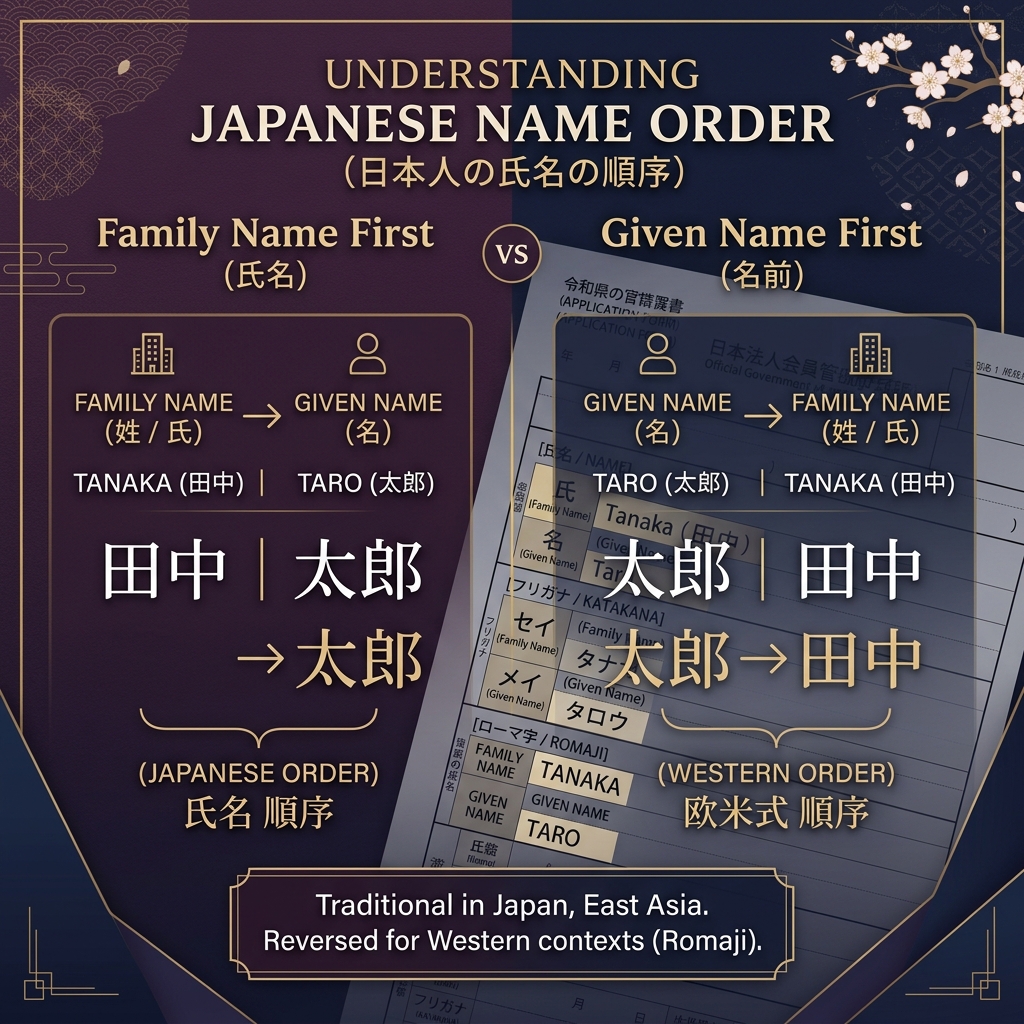
For guidance on how your child's name will be arranged on official school rosters and forms, review our companion guide on Japanese Name Order Explained.
Try the Tool: Test Your Baby Name in Katakana
Want to see how prospective baby names look and sound in authentic Japanese script?
Test Baby Names in Katakana Instantly
Use our free Name to Katakana Converter to experiment with different baby names, check syllable lengths, and discover the perfect bilingual signature for your child.
Test Baby Names in Katakana →Frequently Asked Questions
Can a Japanese citizen legally have a Katakana given name?
Yes, legally! Under Japanese Family Registration Law (Koseki-hō), given names registered in the official Family Register (戸籍, Koseki) may be written in Hiragana, Katakana, or approved Joyo/Jinmeiyo Kanji. Thousands of Japanese citizens, both multicultural and native, have legal Katakana first names.
Why do some parents prefer Katakana over Kanji for international children?
Katakana eliminates ambiguous Kanji readings (nanori), simplifies Japanese school life, guarantees that Japanese speakers pronounce the name accurately on first sight, and reflects the child's multicultural dual heritage with pride.
What English names should be avoided in Japanese due to awkward homophones?
Names like 'Gary' (sounds like 下痢 geri, meaning diarrhea), 'Ben' (sounds like 便 ben, meaning excrement/feces), and 'Skip' (sounds like スキップ, childlike skipping) can cause unfortunate playground teasing. Parents should always audit prospective names with native speakers.
Can a baby have a middle name on their Japanese passport?
Japanese law does not recognize middle names. However, on Japanese passports, parents can register an alternative spelling or include their foreign middle name in parentheses as an official non-standard romanization (hikōshiki tsuzuri) to match their foreign passport.
What are popular bilingual baby names that work seamlessly in Katakana and English?
Top cross-cultural names include Leo (レオ), Kai (カイ), Noah (ノア), Luke (ルーク), Mia (ミア), Maya (マヤ), Sara (サラ), Hanna (ハナ), Emma (エマ), and Naomi (ナオミ). These names are phonetically natural in both languages without awkward vowel distortion.
Sources & References
- Ministry of Justice, Japan (法務省) — Family Registration Act (戸籍法) & Permitted Name Characters (子どもの名に使える漢字・仮名)
- Ministry of Foreign Affairs of Japan (外務省) — Passport Romanization Standards & Non-Hepburn Name Endorsements
- National Institute of Population and Social Security Research (IPSS) — Survey on Multicultural Families and Demographic Trends in Japan
- Meiji Yasuda Life Insurance Company — Annual Japanese Baby Naming & Phonetic Trend Report