What Are Gairaigo (Foreign Loanwords)?
Gairaigo (外来語, literally "words from abroad") are foreign words that have been adopted into the Japanese language. The vast majority come from English, alongside historical borrowings from Portuguese, Dutch, French, and German.
These words are almost always written in Katakana, which serves as a visual marker that immediately tells Japanese readers: "this word has foreign origins." Understanding common Katakana words is essential because they appear everywhere — on menus, product labels, signs, websites, and in everyday conversation.
As an English speaker, you already know the meaning of hundreds of Katakana words! Once you can read the Katakana script, you'll discover that many Japanese words are simply familiar vocabulary adapted to Japanese phonetic rules.
Food & Drinks (食べ物と飲み物)
Food-related Katakana words are among the first you will encounter when visiting Japan, browsing convenience store aisles, or reading restaurant menus.
| Katakana | Romaji | English |
|---|---|---|
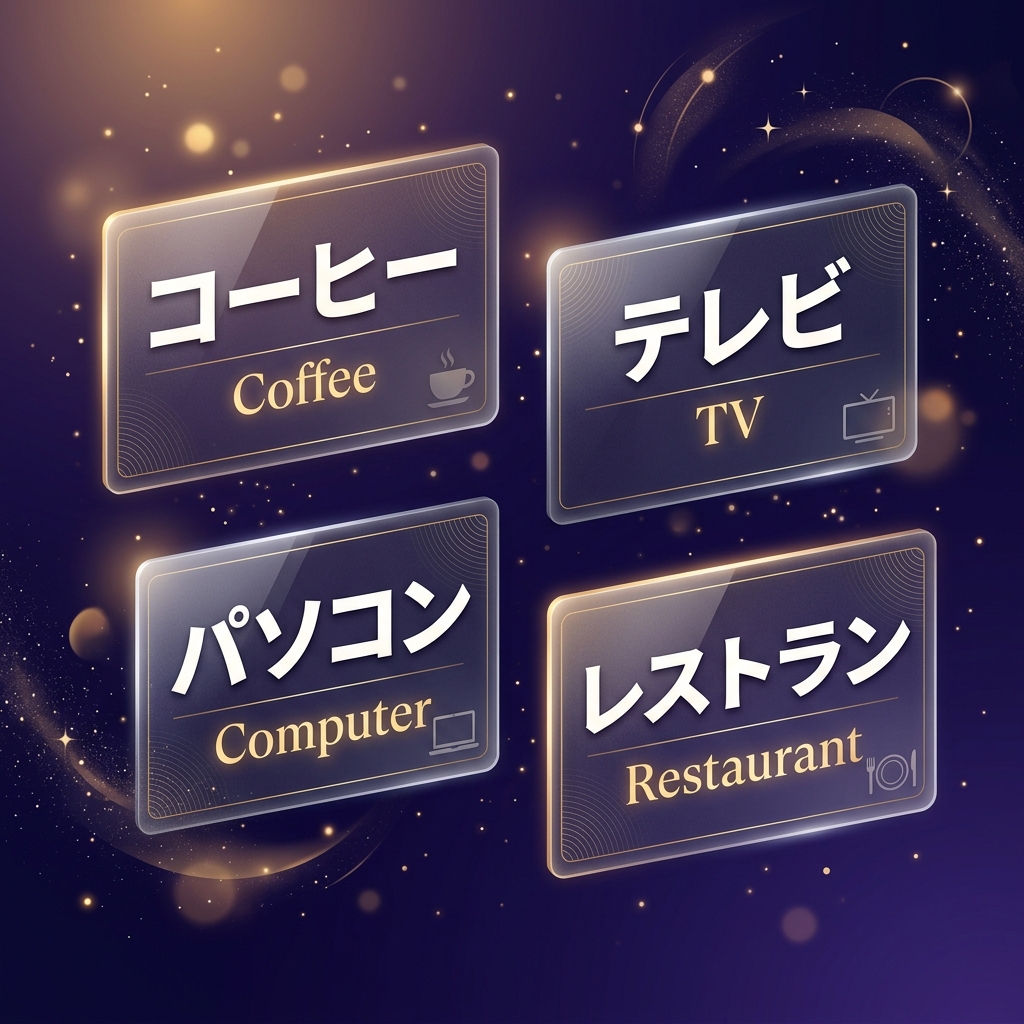
| コーヒー | kōhī | Coffee |
| ビール | bīru | Beer |
| パン | pan | Bread |
| ケーキ | kēki | Cake |
| チョコレート | chokorēto | Chocolate |
| サラダ | sarada | Salad |
| ハンバーガー | hanbāgā | Hamburger |
| ピザ | piza | Pizza |
| パスタ | pasuta | Pasta |
| ジュース | jūsu | Juice |
| ワイン | wain | Wine |
| サンドイッチ | sandoicchi | Sandwich |
| アイスクリーム | aisukurīmu | Ice cream |
| レストラン | resutoran | Restaurant |
| メニュー | menyū | Menu |
| チーズ | chīzu | Cheese |
| バター | batā | Butter |
| スープ | sūpu | Soup |
| ステーキ | sutēki | Steak |
| カレー | karē | Curry |
| トマト | tomato | Tomato |
| バナナ | banana | Banana |
| オレンジ | orenji | Orange |
| ミルク | miruku | Milk |
| ティー | tī | Tea |
| コーラ | kōra | Cola |
| デザート | dezāto | Dessert |
| クッキー | kukkī | Cookie |
| ドーナツ | dōnatsu | Donut |
| ソーセージ | sōsēji | Sausage |
| ハム | hamu | Ham |
| ポテト | poteto | Potato / French fries |
| マヨネーズ | mayonēzu | Mayonnaise |
| ケチャップ | kechappu | Ketchup |
| ヨーグルト | yōguruto | Yogurt |
| ジャム | jamu | Jam |
| プリン | purin | Pudding / Custard |
| アップル | appuru | Apple |
| カフェ | kafe | Cafe |
| ビュッフェ | byuffe | Buffet |
Technology & Electronics (テクノロジー)
Modern computing, consumer electronics, and software terminology in Japanese are written almost entirely in Katakana.
| Katakana | Romaji | English |
|---|---|---|
| パソコン | pasokon | Personal computer |
| スマートフォン | sumātofon | Smartphone |
| スマホ | sumaho | Smartphone (casual) |
| インターネット | intānetto | Internet |
| ネット | netto | Internet / Network |
| テレビ | terebi | Television |
| カメラ | kamera | Camera |
| ソフトウェア | sofutowea | Software |
| ハードウェア | hādowea | Hardware |
| データ | dēta | Data |
| プリンター | purintā | Printer |
| マウス | mausu | Computer mouse |
| キーボード | kībōdo | Keyboard |
| メール | mēru | |
| アプリ | apuri | App / Application |
| ウェブサイト | webusaito | Website |
| パスワード | pasuwādo | Password |
| アカウント | akaunto | Account |
| ファイル | fairu | File |
| フォルダー | forudā | Folder |
| ダウンロード | daunrōdo | Download |
| アップロード | appurōdo | Upload |
| クリック | kurikku | Click |
| スクリーン | sukurīn | Screen / Display |
| モニター | monitā | Monitor |
| バッテリー | batterī | Battery |
| コード | kōdo | Code / Cable |
| リンク | rinku | Link / Hyperlink |
| サーバー | sābā | Server |
| デジタル | dejitaru | Digital |
| オンライン | onrain | Online |
| ロボット | robotto | Robot |
| チャット | chatto | Chat |
| アイコン | aikon | Icon |
| リセット | risetto | Reset |
Sports & Entertainment (スポーツとエンターテイメント)
Athletic competitions, pop culture, instruments, and leisure activities rely heavily on Katakana.
| Katakana | Romaji | English |
|---|---|---|
| サッカー | sakkā | Soccer / Football |
| ベースボール | bēsubōru | Baseball |
| テニス | tenisu | Tennis |
| バスケットボール | basukettobōru | Basketball |
| バレーボール | barēbōru | Volleyball |
| ゴルフ | gorufu | Golf |
| スキー | sukī | Ski / Skiing |
| スケート | sukēto | Skate / Skating |
| マラソン | marason | Marathon |
| プール | pūru | Swimming pool |
| ゲーム | gēmu | Video game |
| スポーツ | supōtsu | Sports |
| ギター | gitā | Guitar |
| ピアノ | piano | Piano |
| コンサート | konsāto | Concert |
| ドラマ | dorama | Drama / TV show |
| アニメ | anime | Anime / Animation |
| マンガ | manga | Manga / Comics |
| カラオケ | karaoke | Karaoke |
| ミュージック | myūjikku | Music |
| ダンス | dansu | Dance |
| チーム | chīmu | Team |
| コーチ | kōchi | Coach |
| プレーヤー | purēyā | Player |
| スタジアム | sutajiamu | Stadium |
| ファン | fan | Fan / Supporter |
| チケット | chiketto | Ticket |
| ルール | rūru | Rule |
| ボール | bōru | Ball |
| ゴール | gōru | Goal |
| スコア | sukoa | Score |
| チャンピオン | chanpion | Champion |
| ライブ | raibu | Live performance |
| アイドル | aidoru | Pop idol |
| イベント | ibento | Event |
Daily Life & Household (日常生活)
From modern home furnishings and urban transit to clothing, office tasks, and shopping, these everyday words are essential for Japanese daily life.
| Katakana | Romaji | English |
|---|---|---|
| テーブル | tēburu | Table |
| ベッド | beddo | Bed |
| ソファー | sofā | Sofa / Couch |
| カーテン | kāten | Curtain |
| シャワー | shawā | Shower |
| タオル | taoru | Towel |
| ペン | pen | Pen |
| ノート | nōto | Notebook |
| カレンダー | karendā | Calendar |
| エアコン | eakon | Air conditioner |
| ホテル | hoteru | Hotel |
| タクシー | takushī | Taxi |
| バス | basu | Bus |
| エレベーター | erebētā | Elevator |
| エスカレーター | esukarētā | Escalator |
| スーツケース | sūtsukēsu | Suitcase |
| パスポート | pasupōto | Passport |
| トイレ | toire | Toilet / Restroom |
| シャツ | shatsu | Shirt |
| スカート | sukāto | Skirt |
| ジーンズ | jīnzu | Jeans |
| コート | kōto | Coat |
| ドレス | doresu | Dress |
| ネクタイ | nekutai | Necktie |
| サングラス | sangurasu | Sunglasses |
| ブーツ | būtsu | Boots |
| アクセサリー | akusesarī | Accessories |
| オフィス | ofisu | Office |
| ビジネス | bijinesu | Business |
| プロジェクト | purojekuto | Project |
| ミーティング | mītingu | Meeting |
| スケジュール | sukejūru | Schedule |
| マネージャー | manējā | Manager |
| プレゼント | purezento | Present / Gift |
| スーパー | sūpā | Supermarket |
| コンビニ | konbini | Convenience store |
| デパート | depāto | Department store |
| バッグ | baggu | Bag |
| ドア | doa | Door |
| スイッチ | suicchi | Switch |
Some Katakana words look like English but have different meanings in Japanese! For example: マンション (mansion) means "apartment/condo" not a luxury mansion. バイキング (viking) means "all-you-can-eat buffet." ナイーブ (naive) means "sensitive/gentle." Always check contextual usage when dealing with Japanese-coined English terms!